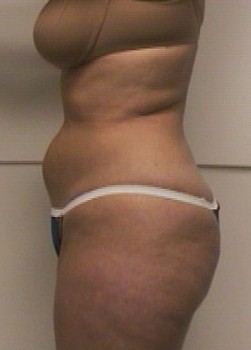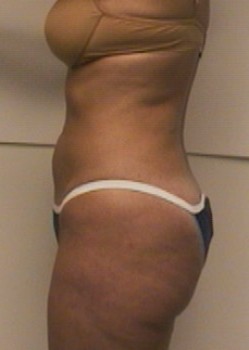

Tumescent Liposuction
In 2006, more than 300,000 liposuction procedures were performed in the United States. Dr. Jeffrey Klein, M.D. developed the safest and most advanced form of this procedure, tumescent liposuction, in 1985. He trained Dr. Puente to perform it in 1994, and since then, Dr. Puente has completed over 10,000 tumescent liposuction procedures on 2,100 patients in 9,000 areas without any complications. Dr. Puente enriches his experience by training other physicians in the tumescent liposuction technique.
Tumescent liposuction may be performed on the abdomen, flanks, arms, buttocks, hips, thighs, knees and chins. Men with enlarged breasts (gynecomastia) can also undergo tumescent liposuction to flatten that area. Active, healthy patients with a normal body weight are ideal candidates for this procedure.
Tumescent Liposuction Procedure
Tumescent liposuction can be performed entirely under local anesthesia and improves the body’s contour by removing unwanted fat deposits located between the skin and muscle. During the procedure, Dr. Puente injects a solution into the fatty tissue that anesthetizes the area, causing it to compress and swell (becomes tumescent). This process enables an accurate, smooth and uniform extraction of targeted fat.
Next, Dr. Puente connects small stainless steel tubes, called cannulas, to a suction machine. He inserts the cannulas through tiny, inconspicuous incisions, and using a high-pressure vacuum, carefully removes fat through tunnels created by the cannulas. After surgery, the tunnels gently collapse and create an improved body silhouette. Patients may notice results quickly, but improvement and contouring increases for up to six months after surgery.
Post-Surgery Activity
After tumescent liposuction, patients can quickly return to their normal activities, and will wear compression garments under their clothes for a week after the procedure. There may be temporary swelling, bruising and numbness in the treated area. The results of this procedure are long-lasting, as fat cells that are removed do not redevelop. However, it is important for patients to exercise regularly in order to maintain their new body contour.